How to Fax Confidential Cover Sheets
To fax a confidential cover sheet, include the sender’s and recipient’s contact information, a confidentiality notice, and instructions for handling documents received in error. With eFax, you can add a confidential cover sheet to your fax and send sensitive documents digitally without a traditional fax machine.
Before you begin
- You need an active eFax account to use the web portal or desktop app.
- Your account includes a dedicated local or toll-free fax number.
In This Article
- How to send a confidential fax cover sheet from a computer
- How to send a confidential cover sheet from email
- What is a confidential cover sheet
- Why a confidential cover sheet matters.
- Key elements of a confidential fax cover sheet
- Best practices to create a confidential cover sheet
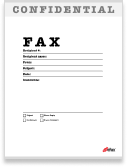
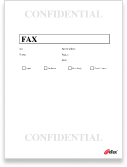
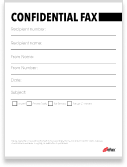
Download Free Printable Confidential Fax Cover Sheet Templates
To make your business communications more efficient, we offer a set of professional fax cover sheet templates that are free to download and use. Each template is designed to be customizable so you can add your company’s branding and details.

How to Send a Confidential Fax Cover Sheet from a Computer
- Download one of our free confidential fax cover sheets or use your own.
- Customize it, adding information such as company name and sender information, recipient information, date, time, number of pages, and any additional notes.
- Open up the eFax Portal or mobile app.
- Click on the option to send faxes.
- Enter the recipient’s country code and fax number.
- Attach your documents.
- Click send.
How to Send a Confidential Fax Cover Sheet from Email
- Download one of our free confidential fax cover sheets or use your own.
- Customize it, adding information such as company name and sender information, recipient information, date, time, number of pages, and any additional notes.
- Open up your email, such as Outlook or Gmail.
- Type the recipient’s fax number in the To field, followed by @send.efax.com. For example: [email protected].
- Type a short message (optional).
- Attach the cover sheet and your document.
- Click send.
Need a different type of fax cover sheet? Download free, customizable fax cover sheets form our library.
Organizations in highly regulated industries frequently need to share sensitive information, such as health documents and financial data.
Confidential fax cover sheets allow employees to securely share this information with clients, colleagues and patients, helping their businesses comply with stringent data privacy regulations.
The Importance of a Confidential Fax Cover Sheet
Providing a confidential fax cover sheet before a fax message is critical for organizations operating in highly regulated industries like financial services, healthcare, law, telecommunications and pharmaceuticals. These industries have specific regulations that outline how organizations should handle and manage customer data, such as the California Consumer Privacy Act (CCPA), the Gramm-Leach-Bliley Act (GLBA), the Health Insurance Portability and Accountability Act (HIPAA) and the Payment Card Industry Data Security Standard (PCI DSS).4 Key Elements of a Confidential Fax Cover Sheet
A confidential fax cover sheet must contain information that advises teh inital recipient who the fax is intended for and to where they should forward it, including:
Confidentiality Statement:
The confidentiality statement makes it clear that the contents of the received fax are private. A confidential fax sent to a healthcare company could include a statement like “Confidential health information enclosed.”
Header:
The header of a confidential fax cover sheet should provide a subject line and a brief description of the fax message’s contents.
Date, Time and Number of Pages:
The confidential fax cover sheet should include the date and time the original fax message was sent and the sender’s name. The cover sheet should also state how many pages are in the fax so the recipient can verify they received the entire message.
Recipient Details:
Providing recipient details ensures the fax message contents are only read by the person the sender intended for them to be read by and limits the risk of compliance failures.
7 Steps to Create a Fax Cover Sheet for Confidential Documents
Create a Clear Confidential Heading
A clear heading is crucial to advising the initial recipient that the fax message contains confidential data for only the intended recipient.
Include the Recipient’s Information:
The intended recipient’s information should be clearly stated on the confidential fax cover sheet. Provide as much information as possible to help the initial recipient identify where to forward the message, including their name, job title and position, department, email and phone number. The recipient’s information should be as visible as possible.
Add the Date and Time:
Including the date and time the fax message was sent is crucial to maintaining clear audit trails. Including the data and time provides a timeline for legal and record-keeping purposes and enables the recipient to confirm the fax arrived on time. The date and time should be placed in a visible position close to the recipient information.
Summarize the Key Point:
Providing a concise summary of the details of the fax message enables the initial recipient to understand its purpose without opening it. The summary should be short but informative, including information like the message’s objective, actions the recipient should take and any urgent deadlines. These details should be positioned below the recipient’s information.
Include the Total Number of Pages:
Providing the total number of pages in the fax message helps the recipient confirm they’ve received the entire document. This information is especially crucial when faxing complex and lengthy documents, as a single missing page in a patient’s diagnosis or a legal contract could be critical. The page number should be placed close to the data and time and key points summary.
Add a Confidentiality Statement:
Adding a confidentiality statement to a fax cover sheet emphasizes the importance of protecting the document. It advises anyone who sees the message to keep the fax private and not read the contents should they receive it by mistake. The statement should include specific language like “This fax message contains confidential information only intended to be read by the individual named above. Unauthorized copying, disclosure and distribution of this document is prohibited.” The confidentiality statement should be prominent on the fax cover sheet and possibly written in larger lettering.
Provide Your Contact Information:
It’s vital to provide the name and contact information of the sender, such as your name, job title, department, email address, phone number and fax number. These details inform the recipient who the message is from and how they can respond to follow-up or seek further clarification. It’s also critical for accountability and auditing and should be listed away from the intended recipient’s details to prevent confusion.
Best Practices for Using Confidential Fax Cover Sheets
To create clear and easily understandable confidential fax cover sheets, follow these best practices:
- Ensure the confidentiality statement is prominent and straightforward.
- Double-check recipient information before sending, and include as much detail as possible.
- Use encrypted messaging services, such as online faxing, to ensure security.
- Ensure HIPAA compliance when sending faxes to healthcare organizations.
Use eFax to Send Faxes Confidentially
The eFax online faxing solution enables users to send fax messages at any time, from anywhere and on any device. The eFax service provides several fax cover sheet templates that make it easy to add confidential fax cover sheets to fax messages that contain sensitive information.FAQs About Confidential Fax Cover Pages
A legal disclaimer in the header or footer of a fax cover sheet. It states that the contents of the fax are confidential and should not be opened, copied, or reviewed by anyone except the intended recipient.
No, there is no specific law that requires use of a confidential fax cover sheet. However, it is highly recommended that you use one as a best practice to protect confidential fax content.
Yes, you can create your own confidential fax cover sheet using the examples and best practices in this article.
Yes. Using eFax, you can attach a confidential fax cover sheet and send it with your electronic faxes.
Whenever there is a significant change to your contact or business information, or when you need to update your confidentiality statement.